
Through the Lens of the Past
On vintage eyewear, the objects that shape identity, and what it means to see with intention.

The room gathered. The frames laid out. The conversation already underway.
It began, as most good pursuits do, with a small inconvenience. Cedric Cheng was a college student in need of a new pair of sunglasses. He had lost his knock-offs and decided, this time, to get the real thing. He spent three hours scouring Manila's old optical stores on an eight-hour break between classes.
What he came back with was a pair of Aviator Shooters — yellow-orange lenses, circular bridge, Bausch & Lomb manufacture, made in America. The kind of object that had a date and a country stamped into it. The kind you could hold and feel the weight of a decision.

Cedric Cheng, proprietor of Studio Rotherwood. Fourteen years of collecting distilled into a single evening — each frame on the table carrying a story he knows by memory.
He didn't keep that first pair long. His film professor saw them, recognised something in the frame, and asked if he was selling. He'd owned a pair back in the day. Cedric let them go for twice what he'd paid.
With the hours and the cash remaining, he went back. Came home with a pair of 1980s Wayfarers. A second professor stopped him — she, too, had lost a pair like that years ago. Two sales in one day, both by chance. Cedric understood something about himself that afternoon. Fourteen years later, he is the proprietor of Studio Rotherwood — a retail house dealing in vintage, heritage, and custom eyewear. He has since collected, chased, and sold hundreds of frames.
The Object
Fourteen years later, Cedric's collection has grown into an education in twentieth-century eyewear. Ask him about a frame and he will likely tell you where it was made, who wore it, and why it matters. That knowledge was not acquired quickly. It compounds — the way all serious collecting does.
"It's on your face. That's the first thing people see. Think of Bob Dylan — you can't separate him from his sunglasses. I really don't know what Bob Dylan looks like without them."
Paul Newman and his aviators. Lou Reed and his oversized frames. Elton John and the many, many pairs he wore through decades of performance. Cinema and music have long shaped the mythology of eyewear — from Alain Delon and Steve McQueen to the Japanese Ivy icons of the postwar era. In each case, the frame became inseparable from the person. The object became part of the signature.
"People often collect watches because they appreciate mechanical engineering. Eyewear is similar. You're collecting design history — the decisions a maker made, the era those decisions came from."
There is a logic to this that goes beyond vanity. Eyewear is the one object in a gentleman's wardrobe that sits permanently on the face — closer to identity than any tie, pocket square, or pair of shoes. Which means that, like those things, it deserves to be chosen with care.

Frames from every decade and every provenance — American, European, Japanese. The spread represents not a trend but a philosophy: that good design, properly made, transcends the era that produced it.
"If you spend on your watch, or your suit, or your jacket, I think the eyewear should also get the same treatment — so you can have one cohesive look. And with vintage, the look becomes a little more distinctive. Especially when it's something harder to find."
The Pursuit
Today, Studio Rotherwood curates vintage American, European, and Japanese eyewear alongside carefully selected contemporary makers. Rather than treating eyewear as a fashion accessory, the studio approaches each frame as a collectible object — valued as much for its provenance as its design. It is, in Cedric's own framing, less a shop than an archive of decisions made in glass, acetate, and metal.
The Fortunate Son is not particularly interested in eyewear. It is interested in what the study of eyewear reveals — about craftsmanship, about identity, about the kind of man who chooses to understand the objects he wears rather than simply wear them.
Collecting vintage frames is, in this sense, the same discipline as collecting vintage watches, or understanding the construction of a bespoke suit. The vocabulary differs. The rigour is identical. You learn to read a hinge. You learn what Bausch & Lomb manufacture means versus what it became after the brand changed hands. You learn that a 1953 Ray-Ban Signet and its 1980s reissue are not the same object, even if they look alike at a glance — and that the difference matters.

The catalogue passes between hands. At Studio Rotherwood, every frame has a provenance — and Cedric can usually tell you where it was made, who wore it, and why it disappeared from production.
That kind of knowledge is not acquired quickly. It compounds. Which is why, when the room gathered that evening around Cedric and his collection, the conversation moved the way collector conversations do — not from frame to frame, but from story to story. The frames were the occasion. The education was the point.
From the Collection
Cedric brought three pieces that evening worthy of particular attention. Each one is an argument — for a different era, a different material, a different way of seeing.
From the Editor
Cedric selected a handful of pieces for those who would like to continue the conversation beyond the evening. Each one is listed in The Archive when available — objects like these rarely come around twice.
Objects Worth Understanding · Studio Rotherwood
Object I
1953 Ray-Ban U.S.A. Signet — First Generation
Made by Bausch & Lomb · 12-Karat Gold Filled · Original G-15 Glass Lenses · Size 52-20
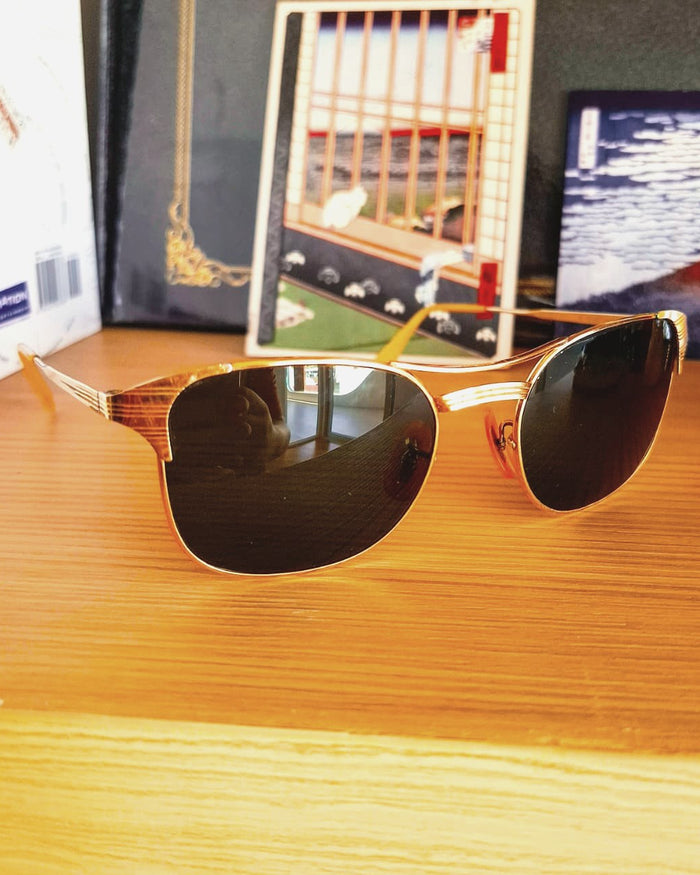
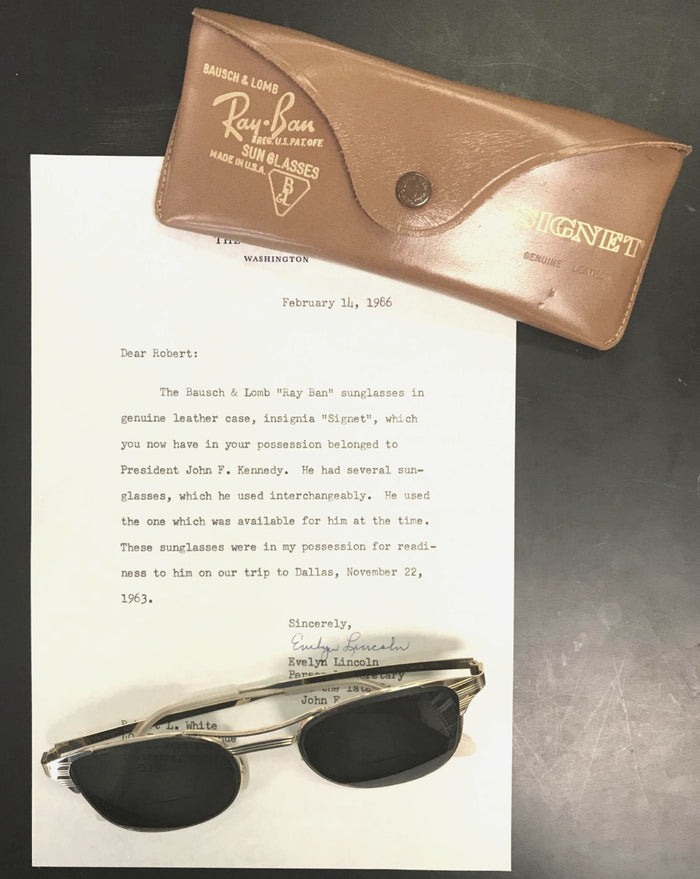
Left: the Signet at rest — a frame that carries its decade in its geometry. Centre: the frames themselves, trapezoidal and uncompromised. Right: the original Bausch & Lomb case alongside the 1986 letter from Evelyn Lincoln, JFK's personal secretary, confirming the sunglasses were prepared for the Dallas trip on November 22, 1963. The Kennedy Library notes that JFK's tortoiseshell sunglasses were long mistaken for Wayfarers — they were not. The Signet is the correct record. The letter leaves no doubt.
— Cedric Cheng
Object II
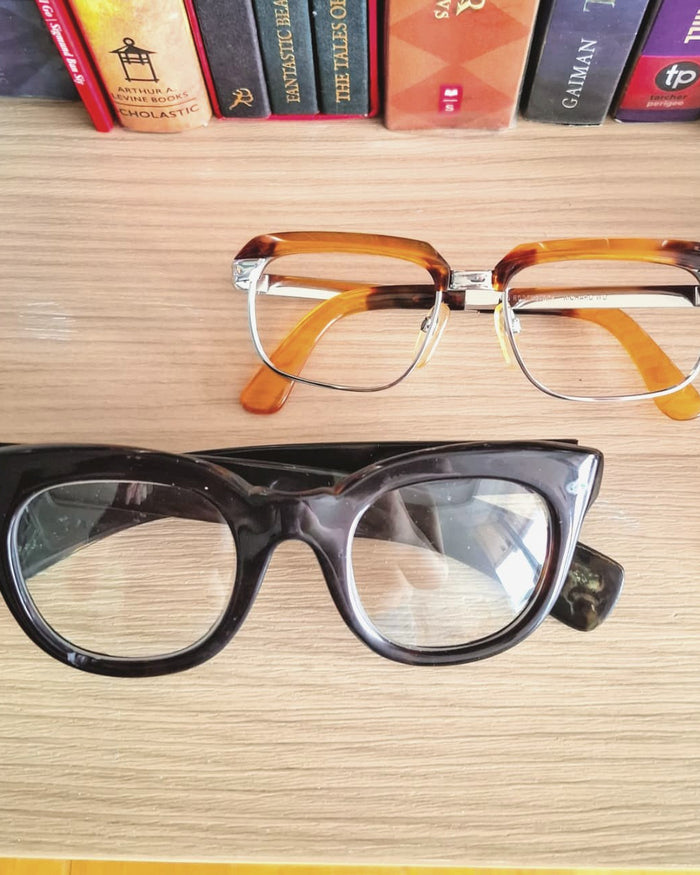
1960s Japanese Hawksbill Turtleshell Eyewear — Bekko
Top: 1968 Rodenstock Germany Richard, Bekko upgrade · Bottom: c. 1962–1965 Dark Bekko thick frames, paddle arms

Two Bekko pieces. The amber-toned browline above is the Rodenstock Richard, its acetate replaced with blonde turtleshell harvested a few shards at a time. Below, the thick monolithic dark bekko — worn as a status symbol, made by neighbourhood craftsmen whose craft no longer exists in the same form.
— Cedric Cheng
Object III
Persol Steve McQueen 714 — Folding Sunglasses
2000s Reissue · 1960s Original Design · With compact leather Persol case

The 714 beside its compact leather Persol case. The folding hinge is the object's defining argument — the same sunglasses, made portable.
— Cedric Cheng

Studio Rotherwood. Bespoke eyewear service available by appointment or inquiry — at The Grey Market Vintage, Cubao.
Conversation
The room that evening was not a showroom. It was a seminar — the informal kind, where the expert does not lecture but rather makes himself available to be questioned. Frames were passed around. Someone tried on the Signets. Someone else held the turtleshell up to the light and turned it slowly, the way you turn a timepiece to read the decoration on the movement.
Cedric answered questions with the patience of someone who has spent years earning the right to have opinions — and who understands that the best way to share them is quietly, through the object itself.
The After Hours was never designed as event coverage. It is a cultural journal — one that begins with an object and ends with a different way of seeing. Every gathering has four protagonists: the object, the expert, the room, and the reader. The first three are visible. The fourth is the only one that matters.
The purpose was never simply to leave knowing more about eyewear. It was to leave asking better questions — about the things we put on our faces, the choices we make without thinking, and what it might mean to make them with a little more care. Curiosity, after all, is less a personality than a discipline. One practiced through conversation, through objects, through evenings like this one.
Good evenings are forgotten. Better conversations stay with you. The best change the way you notice the world the next morning.
EPISODE II · EYEWEAR · THE AFTER HOURS · Written by AURELIO ICASIANO· Presented by The Fortunate Son
Aurelio Icasiano
Field Reporter · The After Hours, Episode II
The TFS Note · What to understand about vintage eyewear
Eyewear is the only object in a gentleman's wardrobe worn on the face. It deserves the same rigour as any tailored piece.
Bausch & Lomb manufacture means the frame was made in America, before the brand changed hands. That distinction matters — it is the difference between the original and the reissue, even when they look alike.
No new Hawksbill turtleshell frames can be legally produced. What exists was made before 1974. Every piece remaining is the last of something.
The collector's question is never "is this valuable?" It is "do I understand why this was made, and by whom, and what it meant?" Value follows understanding. It rarely works the other way.
FROM THE ARCHIVE
The pieces from this evening.
The frames Cedric brought to The After Hours — and others from the Studio Rotherwood collection — are listed in The Archive when available. Each one is one of a kind. There are no restocks. When a piece is gone, it is gone.
Build your Dossier
Read sharper. Receive better.
Take The Swift Initiation so TFS can shape your boxes, Archive recommendations, and notes around your taste and way of living.
Letters from the House.
Notes on wardrobe, objects, craft, and the world of TFS — sent only when there is something worth saying.
I agree to receive emails from The Fortunate Son.