
Gin: The Spirit of History
A note on one of the oldest spirits in the Philippines—and the evening spent understanding it properly.

The evening's expressions, side by side. Each decanter holds a different chapter of the same story.

Paolo Abrera, founder of The Gentleman's Field Guide. He spoke about gin the way a collector speaks about a watch — with the patience of someone who has spent years earning the right to have an opinion.
The Pursuit
"The Philippines drinks the most gin in the world. There's us, and then there's the rest of the world's consumption combined — and we still top their combined total."
It's a statistic that sounds unlikely until you consider what it rests on. Gin is sold in corner stores and grocery aisles, delivered by the truckload to distant provinces. But behind this everyday habit is a tradition nearly two centuries in the making.
History
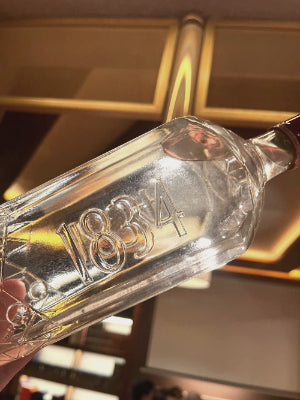
Consider what 1834 actually means. It is not a brand name. It is a date — the year Manila's ports opened to the Galleon trade, when ships from the west arrived carrying goods, ideas, and spirits that would embed themselves permanently into Philippine life. The country's first gin distillery was founded that year. It has not stopped since. What sits in that bottle is not nostalgia; it is continuity. The kind a serious collector learns to recognise.
This is what separates an object worth studying from one merely worth consuming: provenance. The story embedded in the making. That evening, two expressions were brought to the table — each one a different argument for why gin, approached seriously, is as worthy of a collector's attention as any watch or any cloth.
Featured · Philippine Craft Gin
1834 Premium Distilled Gin
Named for the year Manila's ports opened to the Galleon trade. 192 years of uninterrupted distilling. A spirit that carries the date of its own beginning — built from sampaguita, calamansi, juniper berries, coriander seeds, angelica root, orris root, cubeb berries, grains of paradise, and orange and lemon peels. Every botanical a decision; every decision a reflection of place.
Featured · Premium Dry Gin
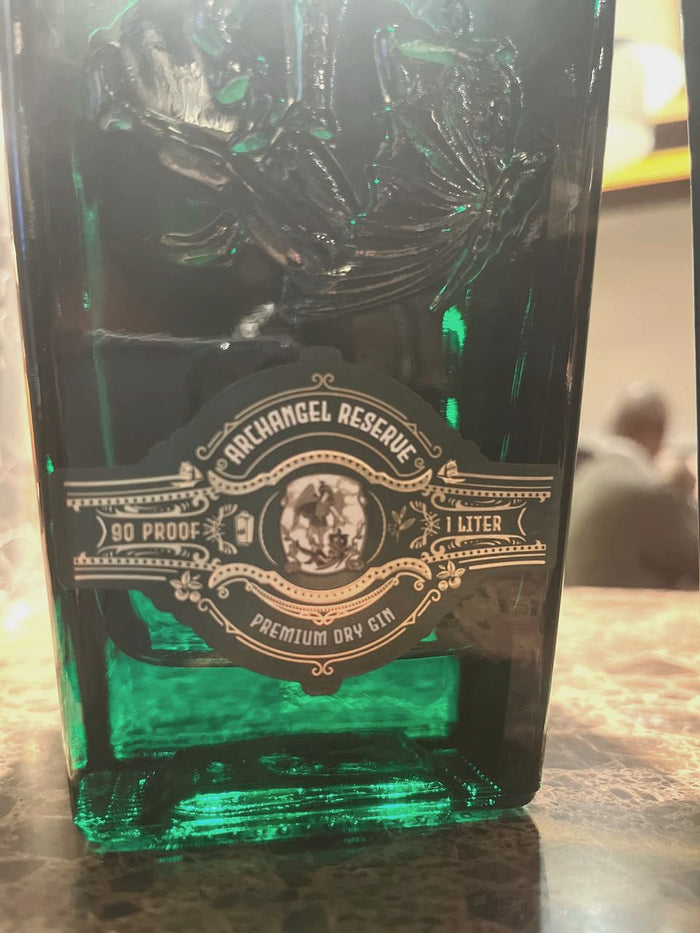
Archangel Reserve
190 years of gin making. 90 proof — higher than most, and deliberate. The bottle is embossed rather than labelled, which tells you something about how seriously it takes itself. The archangel on the glass is not decoration; it is a declaration. A dry gin built for those who already know what they are looking for.
Craft
There is a discipline to understanding any well-made object — and gin, approached seriously, demands the same rigour as a suit or a timepiece. The maker's intention is present in every decision: the botanicals selected, the still used, the proof chosen, the bottle designed. None of it is arbitrary. The person who learns to read those decisions gets something the casual drinker does not: a conversation with the maker, conducted through the object itself.
This is the collector's disposition applied to the glass in your hand. In recent years, gin has found a second life in more considered forms — distilled in small batches, built for savouring rather than consuming. The vocabulary has expanded accordingly. The decanters on the bar that evening were not decorative. They were an argument: that the liquid inside deserved to be approached the way a serious collector approaches anything — with patience, precision, and genuine curiosity about how and why.
The Loafy Cat bar brought its own house infusions to the table — each one a careful composition of ingredients, built to complement the evening's theme. The kind of drink that rewards attention rather than hurry.

The Loafy Cat's house infusion — Batch 3, The Toasted Atelier. A composition of anise seed, toasted rice, clove, and muscovado. Each ingredient chosen deliberately; each sip a small education.
"Gin is wonderfully versatile. It's clear — it doesn't pretend to be anything. But more than flavour, it's something to have a gin with a real sense of history behind every sip."
Conversation
The conversation did not stay on gin for long — which is perhaps the point. It moved, the way good conversation does, from the botanical to the base spirit, from the bottle to the bar, from the bar to the broader question of why certain things are worth understanding properly and others are not.
Someone asked whether it matters, in the end, how much you know about what you drink. Paolo's answer was careful: it doesn't matter for the drink, he said. It matters for you. The person who understands what they are holding gets something different from it — not a better taste, but a fuller one. A more inhabited one.
That is the transformation worth naming. You leave an evening like this not with a new preference, but with a new capacity. The next time you hold a glass — any glass, of anything — you bring more to it. You notice the decisions embedded in the object. You ask better questions. You are, in some small but real way, a more attentive man than you were when you arrived.
Glasses were poured, passed, compared. The Loafy Cat's house infusion made its way around — anise seed, toasted rice, clove, muscovado, each ingredient a small decision. Someone held a glass up to the light. Someone else asked about the still. The conversation moved the way good conversations do: without a destination, but with a direction.
The room was, for a few hours, exactly the kind of place where curious men become more curious still.

Paolo Abrera mid-conversation. The room gathered, the glass raised, the evening doing exactly what it was meant to.
The After Hours was never designed as event coverage. It is a cultural journal — one that begins with an object and ends with a different way of seeing. Every gathering has four protagonists: the object, the expert, the room, and the reader. The first three are visible. The fourth is the only one that matters. The purpose was never simply to leave knowing more about gin. It was to leave asking better questions. Curiosity, after all, is less a personality than a discipline — one practiced through conversation, observation, and the willingness to understand before judging. The man who walks out of an evening like this is not more knowledgeable. He is more attentive. And attentiveness, compounded across years and objects and evenings, is what forms a certain kind of person. Every gathering begins with an object, but rarely ends there. That evening, it was gin. The room exists so that curiosity has somewhere to gather. What each man carried home was his own.
The TFS Note · What to understand about gin
The Philippines is the world's largest gin-consuming nation. Knowing this changes how you hold a Filipino gin — it becomes an object with a biography, not just a drink.
1834 is a date, not a brand name. It marks the opening of Manila's ports to the Galleon trade. The distillery founded that year has not stopped since.
Every botanical in 1834 Gin is a decision: sampaguita, calamansi, juniper, coriander, angelica, orris, cubeb, grains of paradise, citrus peel. Read the list slowly. Each ingredient is a conversation between maker and place.
Curiosity is the discipline. The After Hours exists for men who believe that the objects they choose to understand — spirits, timepieces, cloth, craft — are the ones that shape who they become. The evening is the practice. The transformation is the point.
Good evenings are forgotten. Better conversations stay with you. The best change the way you notice the world the next morning.
episode i · gin · the after hours · Written by aurelio icasiano· Presented by The Fortunate Son
Aurelio Icasiano
Field Reporter · The After Hours, Episode I
The Discovery Box Experience
This is what a subscription opens.
Evenings like this one are part of what The Fortunate Son builds for its subscribers. The Discovery Box is not only about what arrives in the post — it is about the world it gives you access to. The pursuit of gin, the conversation around it, the bar that extends it: these are the kinds of encounters a subscriber discovers in their own time, at their own pace.
The Loafy Cat, the bar where this evening unfolded, welcomes TFS Discovery Box subscribers for private visits — to sit with the same expressions poured that evening, by appointment, without the crowd.
BUILD YOUR DOSSIER
Read sharper. Receive better.
Take The Swift Initiation so TFS can shape your boxes, Archive recommendations, and notes around your taste and way of living.
Letters from the House.
Notes on wardrobe, objects, craft, and the world of TFS — sent only when there is something worth saying.
I agree to receive emails from The Fortunate Son.